📈What's happening to Bitcoin ₿ ?

ArturRem

Large trader
Large trader
In early February 2026, the crypto market experienced one of its most dramatic corrections this year: Bitcoin plummeted from around $90,000 to $61,000, shedding nearly 32% in just a few days. The crash sent shockwaves through the investor community and triggered massive liquidations across the entire crypto ecosystem.

🔍 Why Did Bitcoin Crash?​

Analysts point to several interconnected factors behind this steep decline:

  • Mass Deleveraging: Traders using high leverage were forced to close positions as prices dropped, accelerating the downward spiral.
  • AI Bubble Burst: The overheated artificial intelligence sector—closely tied to crypto narratives—began collapsing, dragging down sentiment and capital flows into digital assets.
  • Post-Halving Cycle Dynamics: Historical patterns suggest that major corrections often follow Bitcoin halving events, and psychological expectations around the 4-year cycle may have amplified selling pressure.
  • Regulatory and Tech Fears: Renewed concerns about quantum computing threats and stricter global regulations added fuel to the panic, especially among institutional players.

📉 Where Are We Now?​

As of mid-February 2026, Bitcoin is trading in the $61,000–$65,000 range, testing critical support levels. Some market observers believe a local bottom may be forming—particularly if the price holds above the $60,000 mark.

That said, even after this correction, BTC remains significantly below its all-time high reached earlier in 2026.

💡 What Should Investors Do?​

  • Stay Calm: Long-term spot holders still have a strong position. Crypto markets have weathered deeper drawdowns in the past and recovered.
  • Avoid Revenge Trading: Emotional decisions after losses often lead to even bigger setbacks. Stick to your strategy.
  • Watch Key Indicators: Keep an eye on trading volumes, macroeconomic news (especially Fed policy), geopolitical developments, and moves by large institutional players.
 

Tofi

Large trader
Large trader
Tensions between the US and Iran have increased due to negotiations over Iran's nuclear program, escalating rhetoric, and military preparations (the US has deployed aircraft carriers, ships, and aircraft to the region). This is leading to a rise in oil prices (+1.5-4%), a decline in stocks, gold, and silver, and, consequently, a decline in BTC as a risk asset.
 

ArturRem

Large trader
Large trader
The crypto market is in a mid-term correction, struggling to break key resistance levels. Investor sentiment remains cautious, with some analysts warning the bearish trend could deepen—potentially pushing Bitcoin below $50,000.
 

ArturRem

Large trader
Large trader
Bitcoin Has Hit a Critical Inflection Point — And Most Are Still Asleep at the Wheel

Let’s be real: just a few months back, I wasn’t fully tuned in either. I’d heard the “institutional adoption is coming” narrative so many times it started to sound like background noise—more marketing than substance.

But then… something changed. Not with loud headlines or viral tweets, but with quiet, structural moves that most people are completely missing.

Today, I’m convinced the vast majority have no clue what’s being assembled beneath the surface of the Bitcoin ecosystem—and how close we are to a major shift.

This isn’t speculation. This isn’t another hype cycle. It’s a familiar pattern—one I’ve witnessed before in early-stage market transformations—and right now, it’s gaining serious momentum.

Here’s the current backdrop:
  • The crypto fear index is flashing extreme panic.
  • Bitcoin has just logged five consecutive months of red closes—a rare and telling signal.
  • Social media is drowning in pessimism: “DeFi is dead,” “L1s are obsolete,” “Crypto winter will never end.”

Yet amid all this noise, the foundations for the next phase are being laid—not by retail traders, but by institutions, developers, and long-term builders who don’t care about short-term sentiment.

While everyone’s looking down, the real game is moving forward.
 

ArturRem

Large trader
Large trader

Bitcoin Crashes Below $67K as ETF Outflows Meet Dollar Strength​

Bitcoin has plunged under $67,000 this week — its lowest level since late 2025 — caught between two powerful headwinds: accelerating outflows from U.S. spot Bitcoin ETFs and a resurgent U.S. dollar.

What's Driving the Sell-Off?​

📉 ETF Bloodbath Continues
U.S. spot Bitcoin ETFs recorded $1.2B in net outflows over the past 7 days. BlackRock's IBIT saw its first multi-day outflow streak since Q4 2025, signaling weakening institutional demand.

💵 DXY Surges Past 106
The U.S. Dollar Index (DXY) jumped to 106.3 on hawkish Fed commentary and stronger-than-expected economic data. Historically, Bitcoin shows a -0.72 correlation with DXY — when the dollar strengthens, crypto bleeds.

🌐 Global Liquidity Squeeze
Emerging markets in Latin America and Southeast Asia — key Bitcoin adoption zones — face capital outflows as dollar strength pressures local currencies. This reduces purchasing power for crypto assets globally.

On-Chain Reality Check​

Despite the price drop:
  • Long-term holders (coins unmoved >155 days) remain unmoved — holding 72% of supply
  • Exchange reserves hit a 4-year low, suggesting limited sell pressure remains
  • Miner capitulation hasn't triggered — hash rate stable at 650 EH/s

What's Next?​

Technical levels to watch:
  • Support: $65,200 (200-day MA) → $62,800 (psychological)
  • Resistance: $69,500 → $72,400 (recent high)

Most analysts view this as a healthy correction within the broader bull structure — not a trend reversal. With spot ETF approvals still pending in Europe and Asia, institutional demand could reignite in Q2 2026.

Pro tip: Volatility spikes like this often precede major moves. Watch ETF flow data daily — when outflows reverse, the bounce tends to be sharp.
 

ArturRem

Large trader
Large trader
Bitcoin closed Q1 2026 down approximately 23%, sliding to the $66K–$68K range. This marks the worst quarterly performance since 2018—and the first negative quarter after an extended bull run that began in late 2024.

Key Drivers Behind the Correction:
• Persistent hawkish stance from the Federal Reserve amid sticky inflation data
• Institutional profit-taking following BTC's all-time high near $92K in December 2025
• Regulatory uncertainty: simultaneous rollout of EU's DAC8 reporting rules and anticipation of the U.S. CLARITY Act created short-term hesitation
• Shift in capital flows toward utility-focused altcoins, particularly Ethereum (+7% in March) and DeFi/RWA projects

Market Perspective:
This isn't a collapse—it's a maturation correction. Healthy pullbacks after multi-year rallies are normal in volatile asset classes. Notably, Ethereum and select Layer-2 ecosystems showed relative strength, signaling investor interest is rotating toward assets with real-world utility rather than pure speculation.

⚠️ Risk Reminder: Cryptocurrencies remain high-volatility instruments. Only allocate capital you can afford to lose entirely. Avoid platforms promising "guaranteed returns" or complex referral pyramids—transparency, audited smart contracts, and identifiable teams matter more than aggressive marketing.

Did you rebalance your portfolio during the dip, or stay the course? Share your take below—clean discussion only, no referral links please.
 

ArturRem

Large trader
Large trader
Bitcoin Could Break Its 4-Year Cycle in 2026 — Analysts Predict New All-Time Highs.
Despite the typical post-halving correction, analysts now suggest Bitcoin may defy its historical four-year cycle in 2026 and surge to unprecedented all-time highs. With institutional adoption accelerating, macroeconomic uncertainty mounting, and spot ETF inflows remaining strong, BTC’s price trajectory could enter uncharted territory—potentially marking a new phase in crypto market maturity.
 

ArturRem

Large trader
Large trader
Bitcoin Surges Past $80K Again!

On May 6, 2026, BTC broke above the key psychological level of $80,000 for the first time since January, peaking at $82,700.

The rally is fueled by renewed institutional inflows, strong demand through Bitcoin ETFs, and ongoing macroeconomic uncertainty driving investors toward digital safe havens.

While short-term corrections remain possible, the bullish trend appears resilient. Stay tuned!

#Bitcoin #BTC #Crypto #Finance #MarketUpdate
 

ArturRem

Large trader
Large trader
❗ CNN reports: The Pentagon has prepared a plan to resume strikes on Iran.

Last time, the outbreak of the conflict caused BTC to plummet from $95,000 to $60,000.
 

ArturRem

Large trader
Large trader
❗ The US launched a new strike on an Iranian military facility near the Strait of Hormuz.

Amid the escalation, Bitcoin fell below $73,000, and ETH below $2,000.
 

ArturRem

Large trader
Large trader
❕ The easing of geopolitical tensions between the US and Iran (signals of a ceasefire and de-escalation) triggered a rebound in Bitcoin from risk-off sentiment and a cascade of short-selling liquidations.
 

ArturRem

Large trader
Large trader
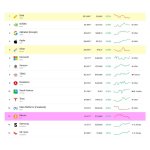
❗ Bitcoin has fallen to 13th place in the top global assets by market capitalization, down 43% from its peak of $126,000.

Historically, after every 40-50% decline, it has reached a new high within 9-14 months.

unnamed (1).jpg
 

ArturRem

Large trader
Large trader
BTC is trading around $73,000–$74,000, remaining in a correction phase following its spring rally. Volatility is elevated, and the market is cautious: buyers are holding support at $72,000–$73,000, while the nearest resistance is at $76,000–$80,000. Consolidation is prevalent in the short term, but the long-term market structure remains bullish.
 

ArturRem

Large trader
Large trader
Large-scale outflows from Bitcoin ETFs are the main reason for the price decline in recent weeks. May saw record outflows (over $2 billion in a month), as investors withdraw their funds.
 

ArturRem

Large trader
Large trader
As we navigate the second half of 2026, the Bitcoin market is currently in a phase of consolidation and correction. For those tracking the macro landscape, here is a concise, data-driven breakdown of where we stand and what to watch next.

1. Current Price Action & Market Structure BTC is currently trading in the $63,000 – $65,000 range. This represents a notable pullback from the previous cycle highs, driven largely by institutional profit-taking and a broader reduction in risk appetite across traditional tech markets.

2. Key Macro Drivers
  • Monetary Policy: Markets are pricing in uncertainty ahead of upcoming Federal Reserve decisions. Liquidity conditions remain a primary catalyst for the next major directional move.
  • Global Adoption Resilience: Despite the price correction, on-chain data shows sustained or growing peer-to-peer and remittance volumes in emerging markets (Latin America, Africa, and Southeast Asia). This underlying utility continues to provide a strong fundamental floor.

3. Technical Levels to Watch
  • Immediate Resistance: $65,500 – $66,000. A daily close above this zone is required to confirm a bullish reversal.
  • Critical Support: $60,000 – $61,500. Holding this level is vital for maintaining the broader macro uptrend. A breakdown could invite a deeper retest of lower liquidity zones.

4. Risk Management & Transparency In times of heightened volatility, discipline is your best asset. Always prioritize projects and platforms with full transparency, identifiable teams, and clear, sustainable tokenomics. Avoid anything promising guaranteed returns. As a golden rule: never invest more than you can afford to lose.

Let’s Discuss:
Rather than superficial price predictions, I’m interested in hearing about your actual strategies. How are you adjusting your DCA (Dollar-Cost Averaging) entries, or what hedging instruments are you using to manage portfolio risk in this current macro environment?

Note: This is for educational and analytical purposes only, not financial advice. Do your own research (DYOR).
 
Advertise here
Top