

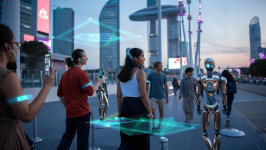
By 2035, the world could be at the heart of a transformation comparable to the Industrial Revolution—but this time, artificial intelligence (AI), quantum computing, brain-computer interfaces, and decentralized digital ecosystems are driving change. Given today’s pace of innovation, daily life, the global economy, and even our very definition of “human” may be radically reshaped within a decade. In this article, we explore what Earth’s tech-driven future might look like in 2035, based on current trends and the logical trajectory of today’s digital technologies.
1. AI Will Become an Invisible, Yet Ubiquitous Infrastructure
By 2035, artificial intelligence won’t be a “feature”—it will be the ambient layer of modern civilization, as essential and unnoticed as electricity or the internet. We won’t “use AI” as a separate tool; it will be embedded in every device, service, and system—from urban traffic management to hyper-personalized health monitoring.- Adaptive operating systems and interfaces: Software will anticipate user behavior, eliminating the need for manual commands. Typing may give way to neural interfaces and gesture-based control.
- Next-generation AI agents: Instead of simple chatbots, autonomous digital agents will negotiate deals, manage finances, and even represent individuals in virtual spaces.
2. Work and Employment: The End of Routine Jobs
According to McKinsey and the World Economic Forum, by 2030–2035 up to 40% of global work activities could be automated. This doesn’t mean “the end of work”—but a fundamental shift in its nature:- Creativity, strategy, and empathy will become core human skills. Professions requiring emotional intelligence—therapists, educators, designers—will surge in demand.
- Universal Basic Income (UBI) may become a reality in several countries, offsetting job displacement from automation.
- Digital identity and reputation will replace traditional résumés: employers will assess verified online contributions, social trust scores, and AI-certified competencies rather than diplomas.
3. Quantum and Neuromorphic Computing Will Power the Digital Economy
While today’s quantum computers remain experimental, by 2035 they could enter mainstream commercial use:- Post-quantum cryptography: Traditional blockchains may evolve into quantum-resistant networks.
- Molecular simulation: AI-accelerated quantum computing will drastically speed up drug discovery, material science, and green tech innovation.
- Neuromorphic chips (mimicking the human brain) will enable ultra-efficient, offline-capable AI devices—no cloud required.
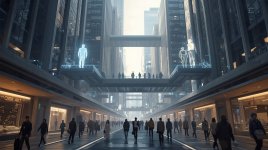
4. The Future Internet: From Web3 to the Spatial Web
Today’s internet is evolving into the Spatial Web—a 3D, immersive, semantically connected digital universe:- AR/VR and digital twins: Every physical object will have a real-time digital counterpart accessible via augmented reality glasses. Buying furniture, home repairs, even medical consultations will happen in mixed reality.
- Self-sovereign digital identities: Users will own their data, not corporations. Blockchain and zero-knowledge proofs will let you verify your identity without revealing private details.
5. Energy and Ecology: Tech as the Answer to Climate Crisis
Digital innovation will become a critical weapon against environmental collapse:- AI-optimized smart grids will balance solar, wind, and green hydrogen energy in real time.
- AI-enhanced Direct Air Capture (DAC) systems will help pull CO₂ directly from the atmosphere.
- Product digital passports will track the carbon footprint of every item—from raw materials to disposal—enabling truly sustainable consumer choices.

